Bringing AI-Ready Data to Nairobi
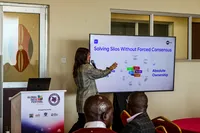
A session at the Global Data festival
Data is critical for modern development. But a widening gap exists between the rapid advance of technology and the resources available to National Statistical Offices. When these vital organizations face resource constraints, decision-makers lack the clear picture they need to plan effectively.
At Google, we believe AI can help meet this challenge, but AI tools are only as reliable as the data underpinning them. To address this, Google joined policymakers, statisticians, and civil society leaders at the 2026 Global Data Festival in Nairobi, Kenya, to share how open infrastructures and local engineering can transform fragmented datasets into open, AI-ready insights.
Unlocking Isolated Data
Too often, critical information is locked away in separate systems. Instead of requiring that everyone use a single, centralized database, our goal is to connect information where it lives.
Google's Data Commons is an open framework that allows different organizations to link their data together. This means a local community group can weave its own findings into a wider network, seeing its report alongside data from the World Bank, all while keeping full ownership and control of their information.
Making Data "AI-Ready"
For AI to make sense of complex information, that data needs to be practical and organized. We focus on three core pillars:
- Discoverable: Data must be easy to find and listed in searchable catalogs so AI tools can discover it automatically in AI-native protocols like the Model Context Protocol (MCP).
- Documented: Data must be easy to understand, accompanied by machine-readable metadata explaining exactly what variables mean and where they came from.
- Structured: Data must be easy to use and organized consistently so machine learning models can process it reliably without hallucinating.
But before data can be analyzed, it has to exist. When existing data collection methods are too slow, costly or provide a partial picture, AI can jumpstart the pipeline. For instance, our Google Earth AI collection of geospatial models and datasets, like the Population Dynamics Foundation Model, could help cluster, zoom-in and fill in the blanks in population data gathered from surveys, news and other indicators, for data-scarce regions and provide more granular, actionable insights for decision makers.
Driven by Local Expertise
This vision isn’t just about technology; it's about people. Our partnership with the Kenya-based engineering team at Digital Divide Data (DDD) is at the heart of this work. Their local experts build and maintain the vital pipelines that make these tools work on the ground.
At the Global Data Festival, we highlighted a Kenyan team member who grew through DDD’s work-study program to become a lead developer on our localized Kenya Data Commons prototype. His story highlights that local expertise is the real key to lasting solutions. By investing in local talent and open platforms, we can help decision-makers across Africa unlock the power of their own data to drive meaningful change.